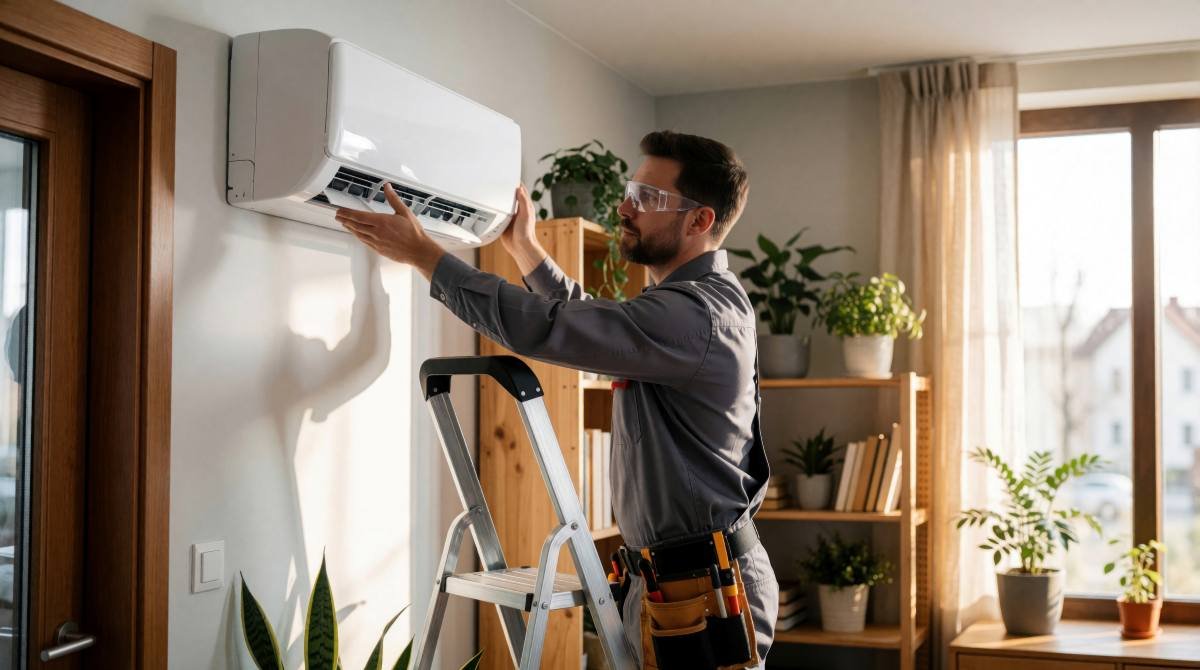
Thinking about installing air conditioning in your home or business but unsure what the process involves?
Whether you’re looking to keep your home cool during the summer, improve comfort in your workplace or enjoy efficient heating throughout the colder months, a professionally installed air conditioning system can make a significant difference.
Modern air conditioning systems offer much more than just cooling. Many provide both heating and cooling, making them a versatile solution for maintaining comfortable indoor temperatures throughout the year.
However, choosing the right equipment and ensuring it’s installed correctly are essential for achieving reliable performance and energy efficiency.
At J & J Air Conditioning & Refrigeration, we provide professional air conditioning installation services across Swansea, Cardiff and South Wales.
In this guide, we’ll walk you through the typical air conditioning installation process, from your initial enquiry to the final system checks, so you know exactly what to expect.
1. Initial Consultation and Site Survey
Every successful air conditioning installation starts with understanding your property and your requirements.
Before recommending a system, a professional air conditioning installer will typically assess your home or commercial premises to determine the most suitable solution.
During the initial consultation or site survey, an engineer may consider:
- Room size and layout: The dimensions of the areas requiring heating or cooling.
- Insulation and windows: How well the building retains heat and how much solar heat enters.
- Room usage: Whether the system is being installed in a bedroom, living room, office, shop or commercial environment.
- Occupancy levels: How many people regularly use the space.
- Equipment and heat sources: Computers, appliances and other equipment that may affect cooling requirements.
- Indoor and outdoor unit locations: Suitable positions for the equipment and associated pipework.
- Electrical requirements: The availability and suitability of the existing electrical supply.
The aim is to recommend an air conditioning system that meets your needs without being unnecessarily large or struggling to maintain the desired temperature.
Why does this matter?
An incorrectly sized air conditioning system may lead to uncomfortable temperature fluctuations, inefficient operation or unnecessary running costs.
A professional survey helps ensure the proposed equipment is appropriate for your property.
2. Choosing the Right Air Conditioning System
Once your requirements have been assessed, your installer can recommend a suitable air conditioning system.
There are several types of systems available, each designed for different spaces and applications.
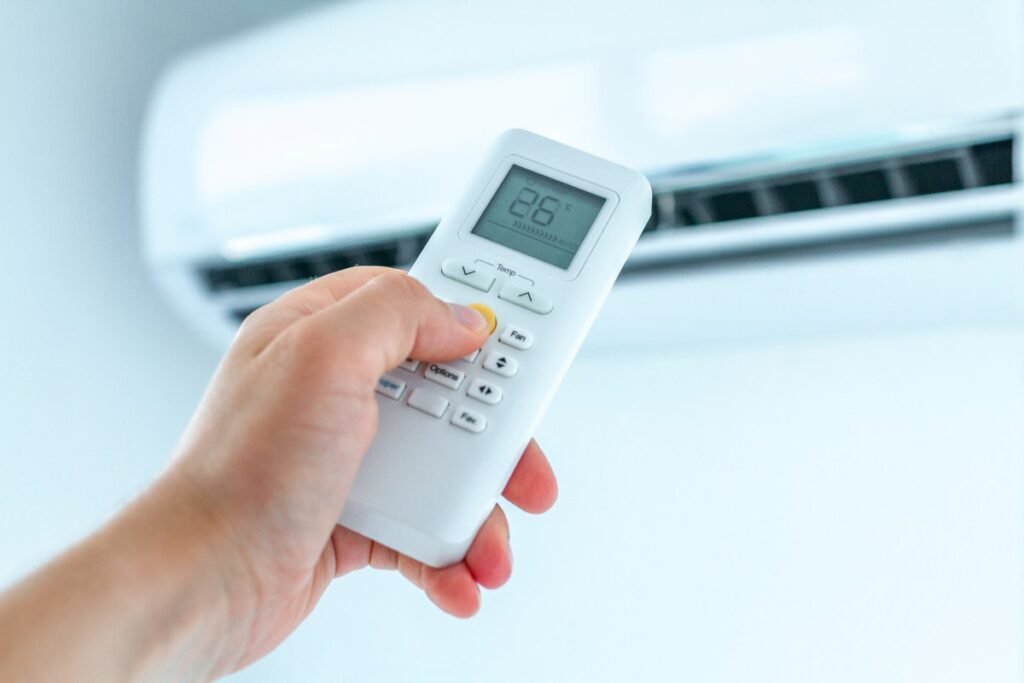
Wall-Mounted Split Air Conditioning
Wall-mounted split systems are a popular choice for bedrooms, living rooms, home offices and smaller commercial spaces.
They typically consist of an indoor unit mounted on a wall and an outdoor unit connected by refrigerant pipework and electrical cables.
These systems can provide efficient heating and cooling while maintaining a relatively discreet appearance.
Multi-Split Air Conditioning
A multi-split system connects multiple indoor units to a compatible outdoor unit.
This can be useful for properties requiring temperature control in several rooms without installing a separate outdoor unit for every indoor unit.
Each indoor unit can generally be controlled independently, depending on the system specification.
Cassette and Ducted Air Conditioning
For offices, retail environments and larger commercial premises, cassette or ducted air conditioning systems may offer a more suitable solution.
Cassette units are commonly installed within suspended ceilings, while ducted systems distribute conditioned air through concealed ductwork.
Your installer should explain the advantages and limitations of each option, helping you choose a system that suits your property, comfort requirements and budget.
3. Receiving Your Air Conditioning Installation Quote
Following the site survey, you should receive a quotation outlining the proposed installation.
A professional quotation should make it clear what equipment is being supplied and what installation work is included.
Typical details may include:
- The recommended manufacturer and system model.
- Heating and cooling capacity.
- Number and type of indoor and outdoor units.
- Proposed installation locations.
- Pipework, electrical and drainage requirements.
- Installation labour and materials.
- Any additional work or access equipment required.
- Estimated installation duration.
- Warranty information and relevant exclusions.
This is also an opportunity to ask questions about the system’s operation, energy efficiency, noise levels and maintenance requirements.
Our advice: Don’t choose an installer based on price alone. The quality of the installation, suitability of the equipment and aftercare support are just as important as the initial cost.
4. Preparing Your Property for Installation
Once you’ve accepted your quotation and agreed on an installation date, there are a few simple things you can do to help the process run smoothly.
Before your installation team arrives, consider:
- Clearing furniture and belongings from the proposed indoor unit location.
- Providing access to the area where the outdoor unit will be installed.
- Moving vehicles or other obstructions if external access is required.
- Making sure the installation team can access the relevant electrical supply.
- Protecting or removing any particularly delicate or valuable items near the work area.
Your installer should explain any specific preparations required before work begins.
For commercial properties, installation work may need to be coordinated around opening hours, staff access or other business activities to minimise disruption.
5. Installing the Indoor Air Conditioning Unit
On installation day, engineers will normally begin by confirming the agreed equipment locations and preparing the work areas.
For a typical wall-mounted split system, the indoor installation process usually involves positioning and securely fixing a mounting bracket to a suitable wall.
The engineer will then prepare a route for the required refrigerant pipework, electrical connections and condensate drainage.
Depending on the layout of your property, this may involve drilling an opening through an external wall.
The indoor unit is then mounted in its designated position.
Professional installers consider several important factors when positioning indoor units, including:
- Effective airflow around the room.
- Suitable access for future servicing.
- Avoiding unnecessary airflow directly towards occupants.
- The manufacturer’s installation clearances.
- The appearance of the finished installation.
Where practical, pipework and cables can be routed discreetly to maintain a neat finish.
The exact process may differ for ceiling cassette, floor-mounted or ducted air conditioning systems.

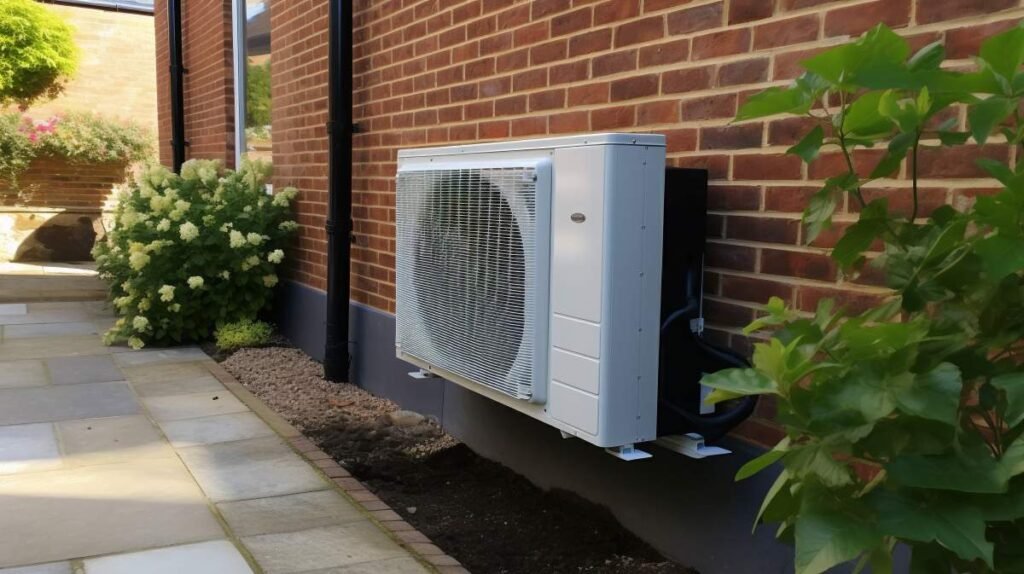
6. Positioning and Installing the Outdoor Unit
Most fixed split air conditioning systems also require an outdoor unit.
This component plays an essential role in transferring heat between the indoor environment and the outside air.
The outdoor unit may be installed on a suitable ground-mounted base or secured to a wall using appropriate brackets.
Your installer will assess the best location based on several factors, including:
- Manufacturer-recommended ventilation clearances.
- Safe access for maintenance and servicing.
- Noise considerations for occupants and neighbouring properties.
- Suitable structural support.
- Pipework routing and maximum permitted distances.
- Protection from avoidable physical damage.
The outdoor unit must have sufficient airflow to operate correctly.
It is also important to consider whether planning permission, building regulations or other property restrictions apply, particularly for listed buildings, leasehold properties or certain external installations.
A professional installer can help identify relevant requirements before work begins.
7. Connecting Pipework, Drainage and Electrical Supplies
Once the indoor and outdoor units are positioned, the installation team will connect the components.
This stage generally involves installing and securing refrigerant pipework, arranging condensate drainage and completing the necessary electrical connections.
Refrigerant pipework must be correctly installed and insulated in accordance with the manufacturer’s instructions.
Drainage is particularly important because air conditioning systems can produce condensation during cooling.
If condensate is not drained correctly, it may cause unwanted water leaks or property damage.
Electrical connections must also be suitable for the system and completed safely.
Installation work involving regulated fluorinated refrigerants must be carried out by appropriately qualified personnel working for a certified business where required.
Professional installation is essential for safe operation, regulatory compliance and long-term system reliability.
8. Testing and Commissioning the Air Conditioning System
After installation, the system must be properly checked before being handed over to the customer.
This process is known as commissioning.
Commissioning helps verify that the air conditioning equipment has been installed correctly and is operating according to the manufacturer’s specifications.
Depending on the system, an engineer may carry out:
- Refrigerant pipework pressure and leak testing.
- Evacuation of the refrigerant circuit.
- Electrical safety and connection checks.
- Condensate drainage testing.
- Heating and cooling performance checks.
- Temperature and airflow checks.
- Controller and thermostat operation.
- System fault and diagnostic checks.
The exact testing procedures depend on the equipment and installation requirements.
Your engineer should investigate and resolve any identified problems before considering the installation complete.
9. Learning How to Use Your New Air Conditioning
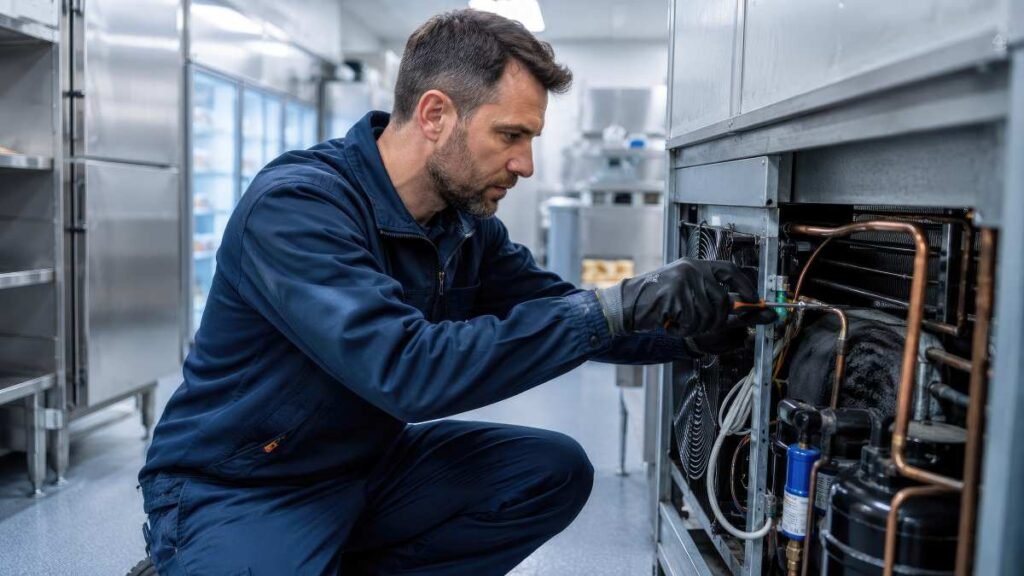
Once the system has been installed and successfully tested, your installer should demonstrate how to operate it.
Modern air conditioning systems offer a range of useful features, depending on the model.
These may include:
- Adjustable heating and cooling temperatures.
- Fan speed and airflow direction controls.
- Automatic operating modes.
- Timers and scheduling functions.
- Sleep or quiet modes.
- Wi-Fi and smartphone app control.
The engineer should explain the basic controls, demonstrate how to change operating modes and provide information about routine user maintenance.
You should also receive relevant operating instructions and warranty information.
Understanding how to use your system correctly can help you maintain comfort while avoiding unnecessary energy consumption.
10. Aftercare and Regular Air Conditioning Servicing
A professional air conditioning installation shouldn’t be the end of your relationship with your installer.
Like most heating and cooling equipment, air conditioning systems benefit from regular maintenance.
Over time, dust, dirt and debris can accumulate in filters and other components, potentially reducing airflow and system performance.
Routine maintenance may involve:
- Cleaning or replacing air filters.
- Inspecting indoor and outdoor units.
- Checking drainage systems.
- Inspecting electrical connections.
- Checking system performance.
- Investigating unusual noises or operating problems.
- Completing refrigerant leak checks where legally required.
The recommended servicing frequency will depend on the type of system, its operating environment, usage and manufacturer guidance.
Keeping your system properly maintained can help preserve performance, support energy efficiency and identify developing problems before they become more serious.
Frequently Asked Questions About Air Conditioning Installation
How Long Does an Air Conditioning Installation Take?
A straightforward single-room wall-mounted split system can often be installed within one working day, depending on the property and installation requirements.
More complex installations, multi-room systems and larger commercial projects may take several days or longer.
Your installer should provide an estimated timescale once the property has been assessed.
Is Air Conditioning Installation Messy?
Some drilling and minor disruption may be required, particularly when creating openings for pipework or installing mounting brackets.
Professional installers should take reasonable precautions to protect the surrounding area and leave the worksite tidy.
The amount of disruption depends on the type of system and the complexity of the installation.
Can Air Conditioning Heat My Home in Winter?
Yes. Many modern air conditioning systems use air-to-air heat pump technology, allowing them to provide both heating and cooling.
These systems transfer heat rather than relying solely on direct electrical resistance heating, making them an efficient option in suitable conditions.
Actual efficiency will depend on the system, outside temperature, building insulation and operating settings.
Do I Need Planning Permission for Air Conditioning?
Planning requirements depend on the type of system, the property and the location of the installation.
Some air-to-air heat pump installations may qualify for permitted development rights, subject to relevant conditions, while other air conditioning installations may require planning permission.
It’s important to check the applicable rules for your property and local planning authority before proceeding.
How Much Does Professional Air Conditioning Installation Cost?
The cost depends on several factors, including the equipment selected, the number of rooms, installation complexity and electrical requirements.
A single-room installation will generally involve less equipment and labour than a multi-room or large commercial system.
The most reliable way to establish the cost is to request a quotation based on your specific requirements.
Professional Air Conditioning Installation in Swansea, Cardiff and South Wales
At J & J Air Conditioning & Refrigeration, we provide professional air conditioning installation services for residential and commercial properties across Swansea, Cardiff and the wider South Wales region.
Whether you’re looking to improve comfort at home, install air conditioning in your office or upgrade the heating and cooling system at your business, our team can help you explore suitable options.
From discussing your requirements and recommending equipment to installation and ongoing servicing, we’re here to help you find the right solution for your property.
Ready to Install Air Conditioning?
If you’re considering a new air conditioning system, speak to J & J Air Conditioning & Refrigeration.
Contact our team today to discuss your requirements and request a quotation for professional air conditioning installation in South Wales.
Professional installation. Year-round comfort. Reliable performance.