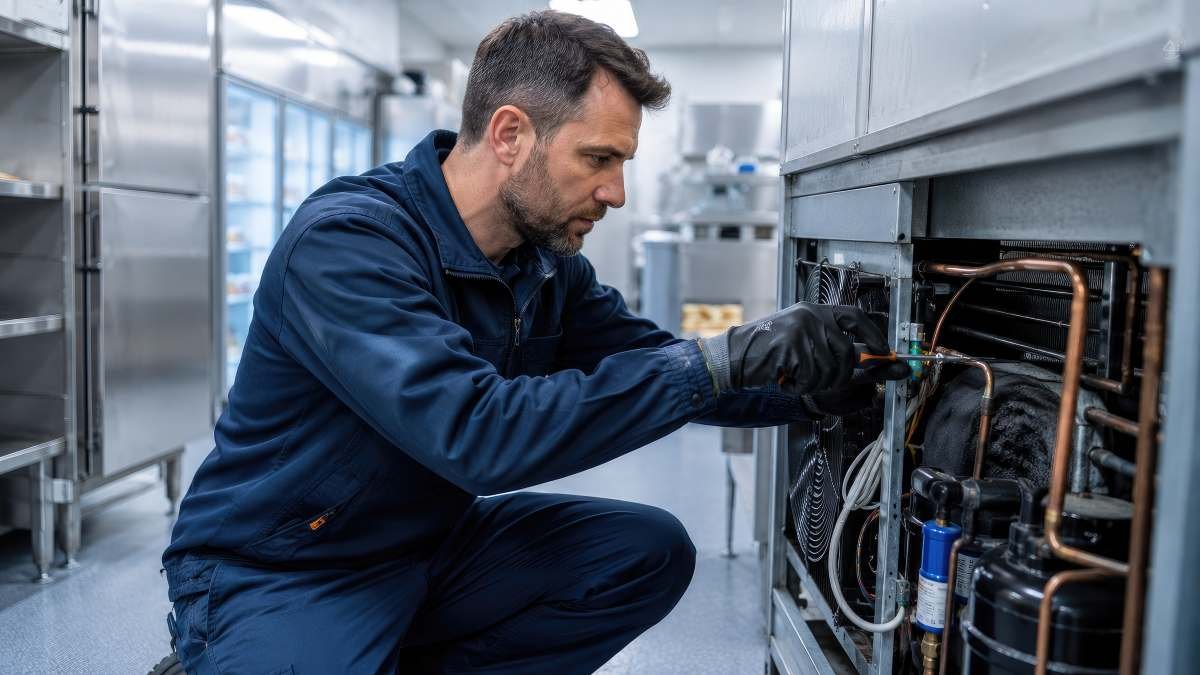
As temperatures drop during the winter months, businesses often focus on heating and keeping their premises comfortable. However, one essential system that shouldn’t be overlooked is commercial refrigeration.
Whether you operate a restaurant, café, hotel, supermarket or food storage facility, your refrigeration equipment plays a vital role in protecting stock, maintaining food safety and keeping your business running smoothly.
Although commercial refrigeration systems are designed to maintain consistently low temperatures, colder weather can introduce challenges, particularly for equipment installed outdoors or in unheated areas.
At J & J Air Conditioning & Refrigeration, we help businesses across Swansea, Cardiff and South Wales maintain reliable and efficient refrigeration systems throughout the year.
Here are our expert tips for keeping your commercial refrigeration running reliably during winter.
1. Understand How Cold Weather Affects Commercial Refrigeration
It might seem logical that refrigeration equipment would perform better during colder weather. After all, the outside temperature is lower, so the system should have less work to do.
However, this isn’t always the case.
Some commercial refrigeration systems rely on specific operating pressures and temperatures to function correctly. When outdoor temperatures fall significantly, equipment that hasn’t been designed or configured for low ambient conditions can experience performance issues.
Potential problems include:
- Low condensing pressure affecting refrigerant flow.
- Refrigeration systems struggling to maintain consistent internal temperatures.
- Compressor starting and operating difficulties.
- Increased wear on components if operating conditions fall outside the manufacturer’s specifications.
- Condensation or ice forming in areas where drainage or airflow is restricted.
Systems with outdoor condensers are particularly worth checking before winter arrives.
Our advice: Arrange a professional refrigeration inspection to confirm your system is suitable for operating in lower temperatures.
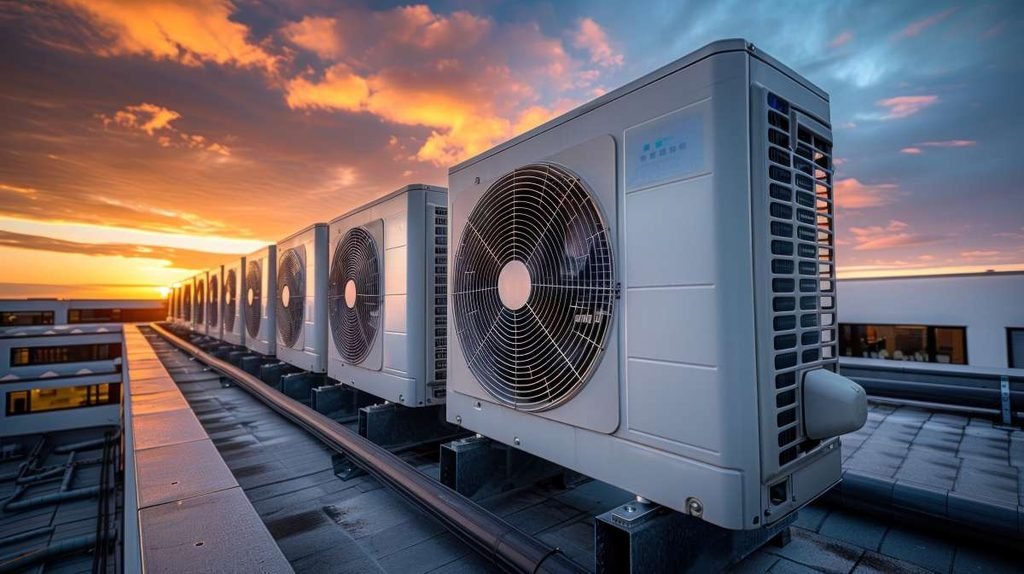
2. Keep Condenser Units Clean and Free From Obstructions
Your refrigeration system needs adequate airflow to operate efficiently.
During autumn and winter, outdoor condenser units can become obstructed by fallen leaves, dirt, debris and other materials carried by the wind.
Restricted airflow can affect heat transfer, increase strain on components and reduce overall system performance.
To help prevent problems:
- Check that outdoor condenser units remain free from leaves and debris.
- Keep surrounding areas clear to maintain adequate ventilation.
- Avoid storing boxes, equipment or other items around refrigeration units.
- Check for snow or ice obstructing outdoor equipment during particularly cold conditions.
- Arrange professional condenser cleaning as part of your maintenance schedule.
Never attempt to remove protective panels or clean electrical and mechanical components unless you’re trained and authorised to do so.
A clean, unobstructed condenser helps your refrigeration equipment operate safely and efficiently throughout the winter.
3. Check Door Seals and Reduce Cold Air Loss
Damaged or worn door seals are a common cause of inefficient commercial refrigeration.
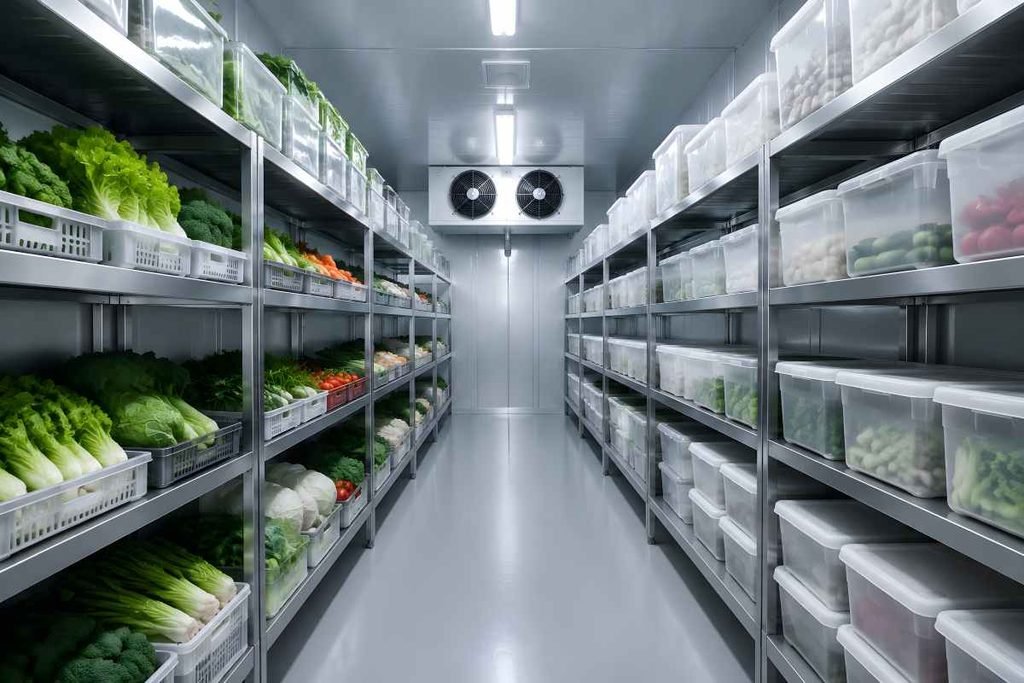
Whether you’re using a walk-in cold room, commercial display fridge or upright freezer, door seals help maintain the correct internal temperature by preventing unwanted air exchange.
If a seal becomes cracked, loose or damaged, warmer air can enter refrigerated compartments, increasing the cooling demand and potentially causing condensation or ice build-up.
Winter is a good opportunity to inspect:
- Cold room doors and gaskets.
- Commercial fridge and freezer seals.
- Hinges and automatic door closers.
- Sliding doors on refrigerated display cabinets.
Look for visible gaps, torn seals or doors that don’t close properly.
Replacing damaged seals can help improve temperature stability, reduce unnecessary energy consumption and protect refrigerated stock.
4. Monitor Refrigeration Temperatures Regularly
Maintaining the correct storage temperature is essential for businesses handling food and other temperature-sensitive products.
A refrigeration system that appears to be running normally could still be operating outside its recommended temperature range.
For general food storage in Wales, chilled food must normally be kept at 8°C or below, although the Food Standards Agency recommends setting refrigerators to 5°C or below to allow for temperature fluctuations.
Commercial freezers storing frozen food will commonly operate at around -18°C, subject to product and operating requirements.
To maintain reliable temperature control:
- Monitor and record temperatures regularly.
- Check that temperature displays and probes are accurate.
- Investigate unusual fluctuations rather than simply adjusting the thermostat.
- Make sure refrigerated products do not obstruct internal airflow.
- Check alarms and monitoring systems are functioning correctly.
Some businesses may benefit from remote temperature monitoring and automatic alerts, particularly where valuable stock is stored overnight.
Consistent temperature monitoring helps identify potential refrigeration faults before they result in significant stock losses.
5. Inspect Drainage and Prevent Ice Build-Up
Ice accumulation can affect the performance of both commercial refrigerators and freezers.
Blocked drainage outlets, damaged door seals, defrost problems and restricted airflow can all contribute to unwanted ice formation.
During winter, exposed condensate drains may also be vulnerable to freezing where temperatures fall below zero.
Common warning signs include:
- Excessive ice forming around evaporator coils.
- Water collecting beneath refrigeration cabinets.
- Frozen or obstructed drainage pipes.
- Unusual amounts of condensation.
- Refrigeration equipment taking longer than normal to reach its set temperature.
If you notice recurring ice build-up, it’s important to identify the underlying cause rather than repeatedly removing the ice.
A qualified refrigeration engineer can inspect the drainage system, defrost controls and relevant components to diagnose the problem.
6. Arrange Preventative Commercial Refrigeration Maintenance
One of the most effective ways to avoid unexpected refrigeration breakdowns is to arrange regular preventative servicing.
Waiting until equipment fails can lead to expensive emergency repairs, business disruption and potentially significant stock losses.
A professional commercial refrigeration maintenance visit may include:
- Inspecting condenser and evaporator coils.
- Checking refrigerant circuit performance.
- Inspecting fans, motors and electrical connections.
- Testing temperature controls, probes and safety devices.
- Checking door seals and drainage systems.
- Reviewing defrost operation.
- Carrying out refrigerant leak checks where required.
- Identifying worn or deteriorating components.
Regular servicing can help improve reliability, identify developing faults and support energy-efficient operation.
The appropriate service frequency will depend on the equipment, its operating environment, manufacturer recommendations and how heavily it’s used.

7. Know the Warning Signs of Refrigeration Problems
Many refrigeration breakdowns are preceded by warning signs that can easily be overlooked during a busy working day.
Contact a commercial refrigeration engineer if you notice:
- Refrigerated cabinets struggling to maintain their set temperatures.
- Compressors running continuously or repeatedly starting and stopping.
- Unusual buzzing, rattling or vibration.
- Excessive frost or ice forming around internal components.
- Water leaking from cabinets or cold rooms.
- Unexpected increases in energy consumption.
- Refrigeration alarms or fault codes appearing.
Addressing these issues early can often prevent more serious equipment damage and disruption.
If your refrigeration equipment cannot maintain safe storage temperatures, follow your food safety procedures immediately to protect your stock and customers.
Why Commercial Refrigeration Maintenance Matters for Your Business
For businesses that depend on refrigeration, reliable equipment is about much more than keeping products cold.
A properly maintained refrigeration system can help:
- Protect valuable stock: Reduce the risk of food spoilage and product losses.
- Reduce unexpected downtime: Identify potential faults before they become serious.
- Improve energy efficiency: Help equipment operate without unnecessary strain.
- Support food safety: Maintain suitable conditions for chilled and frozen products.
- Extend equipment lifespan: Reduce avoidable wear through regular inspections and servicing.
Investing in preventative maintenance is often more practical than dealing with the disruption of an unexpected breakdown.
Commercial Refrigeration Servicing in Swansea, Cardiff and South Wales
At J & J Air Conditioning & Refrigeration, we understand how important reliable refrigeration is to businesses that depend on temperature-controlled storage.
We provide commercial refrigeration servicing, maintenance and repairs for businesses across Swansea, Cardiff and the wider South Wales region.
Whether you need routine maintenance, help investigating a refrigeration fault or advice about keeping your equipment running efficiently, our team is here to help.
Keep Your Commercial Refrigeration Running Reliably This Winter
Don’t wait for a refrigeration breakdown to disrupt your business.
Contact J & J Air Conditioning & Refrigeration today to discuss your commercial refrigeration requirements and arrange professional support.
Reliable refrigeration. Protected stock. Peace of mind.